
Wrapped up a kitchen LED install today that turned out really clean. Under-cabinet strips, warm light, aluminum channels; the whole setup. A lot of homeowners ask me about LED lighting and whether it's something they can do themselves. Honestly, yes; but there are a few things that separate a nice finished look from something that looks like it came out of a gaming setup. Here's what actually matters.
What to Know Before You Start
LED strips are cheap and everywhere now, but not all of them are worth buying. The three things that will make or break your install are color temperature, how you mount the strips, and how dense the LEDs are on the strip itself. Get those right and you'll have lighting that looks intentional.
Skip RGB; Pick a Color Temperature Instead
- Warm white (2700K to 3000K) works great in kitchens with wood cabinets or warm tones; it feels inviting and natural
- Cool white (3500K to 4000K) fits modern kitchens with white cabinets or stainless steel; it reads as clean and bright
- RGB strips sound fun but most people set them to one color and leave them; a dedicated warm or cool strip will look better and cost less
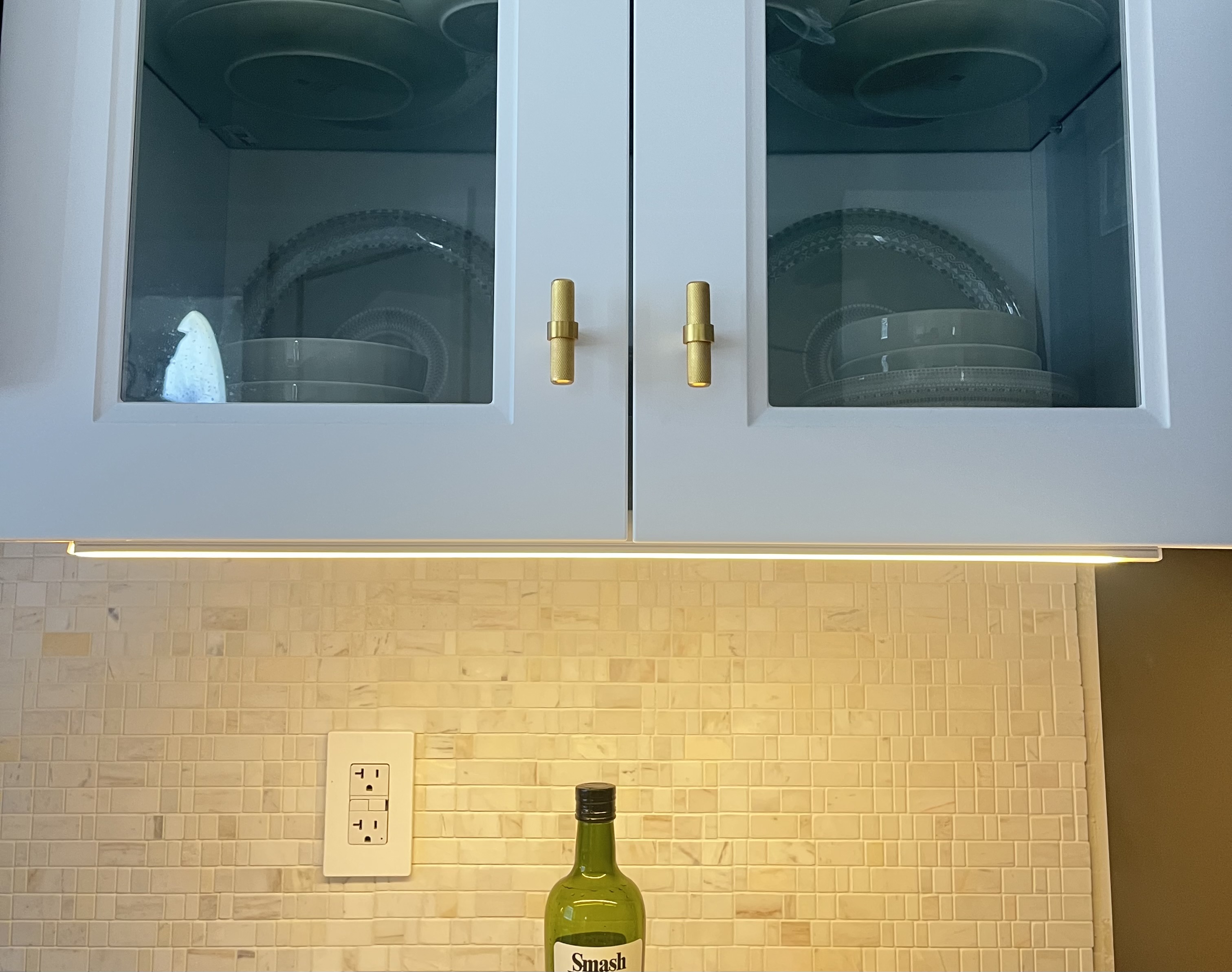
Always Use Aluminum Channels with a Diffuser Cover
- Aluminum channels pull heat away from the strip, which extends the life of your LEDs significantly
- The frosted diffuser cover spreads the light evenly so you don't see individual hot spots or dots along the strip
- Without a channel, your strip is just tape on wood; it looks unfinished and the LEDs will fade faster from heat buildup
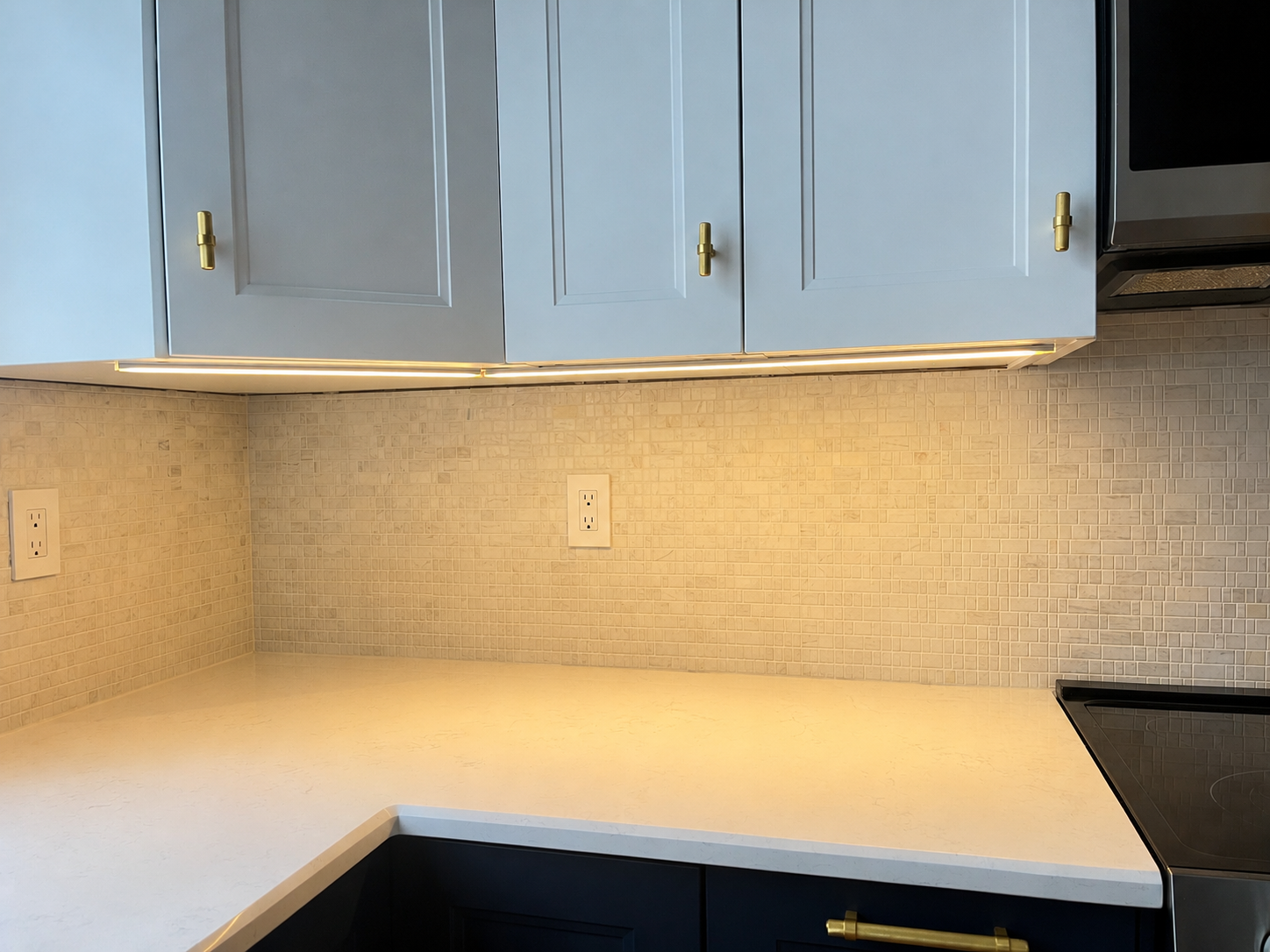
LED Density Matters More Than Brightness Settings
- Look for strips rated at 60 LEDs per meter or higher for under-cabinet or task lighting; lower density creates a dotted look even with a diffuser
- High-density strips (120 LEDs per meter) give you smooth, even output that looks like a real fixture
- Cheap strips often skip this spec entirely; check the product listing before you buy
The Result
The kitchen came out looking like it had professional lighting built in, not like someone stuck LED tape under the cabinets. When you use the right color temp, run the strips through proper channels, and start with a high-density strip, the difference is obvious. This is a job a motivated homeowner can do on a weekend; but if you want it to look truly clean and you don't want to mess with measuring, cutting, and wiring connectors, reach out if you need a hand.